
Why your aesthetics clinic should be using software instead of paper
September 28, 2022
Can software help you save time in your aesthetics clinic?
March 28, 2024
Managing before and after photos
One aspect of an aesthetic treatment that every practitioner will be familiar with is before and after photos. But there is a lot more to consider than just pulling out your phone and snapping a few photos.

Emma Carter • Oct 18, 2022
Are you storing photos securely? Why is it important to have robust processes to manage them? Are you adhering to all of your requirements for insurance, GDPR and professional bodies?
This blog will give you some points to consider and offer advice on how to manage your before and after photos appropriately.
Why is it important to take before and after photos?
Before and after photos are an essential part of your patient record. They should clearly show the patient’s changes across their treatment journey, including the appearance before the treatment and the result following treatment. These photos can also provide supporting evidence for your insurance if a complication or complaint is made against you.
As well as forming part of your treatment documentation, before and after photos are a great way to showcase the transformation your patient has received and can have a positive impact on patient satisfaction, especially by creating and sending a before and after comparison to them.
What are your responsibilities for managing before and after photos?
Storage and security of your before and after photos (and your patient’s data in general) leads onto the requirements you have as a medical practitioner and business owner. It is your responsibility to protect your patients’ information. You must be aware of the responsibilities required to ensure you comply with government legislation, your insurance policy, and professional bodies.
General Data Protection Regulations (GDPR)
GDPR sets out the way that you should process, use and store personal data about your patients. As an aesthetic practitioner, you handle a lot of your patients’ personal data. It is crucial that you ensure data is stored and managed safely and securely.
If your before and after photos are not stored in a secure system, how can you be confident that they aren’t at risk of being lost? Can you be assured that someone couldn’t accidentally access another person’s photos? Often, the most common place that practitioner store photos, especially when they’re getting started, is on a mobile phone. However, this method of storage raises serious concerns for data security and potentially can breach GDPR.
Storing patients’ photos on your phone puts them at risk of being lost or exposed. What if your phone went missing or was stolen? All of your patients’ photos could fall into the wring hands. If your phone was to break, would you have a backup of all your photos, or would they be gone forever?
Whilst it is quick and convenient way to take photos on your phone, it is not where they should be stored to ensure they are secure. Aesthetic Nurse Software stores your patients photographs within a cloud-based system that is encrypted and protected with SSL security, meaning that all photos and data is regularly backed up and protected between the server and web browser or device you are accessing them on.
Insurance
It’s common practice for insurance providers to require as a condition of their policy that before and after photos be taken with all injectable treatments.
Certain Insurance policies state that without before and after photos, the policy conditions are not met. Strongly advising that it is best practice to take after photos to show the treatment results. Clear notes and photos are the best form of protection when it comes to defending a claim.
The emphasis of just how important the inclusion of before and after photos within your records ensures that the right documentation evidence is present if ever a claim was made against you. Not only that, but if your photos have not been stored securely and are lost, you may not be covered by your insurance.
Professional Bodies
As a medical professional your responsibilities are no different when it comes to your aesthetic patients.
Section 10 of the NMC’s code states that all qualified practitioners must keep clear, accurate and secure records.
Section 119 of the GMC ethical guidance for managing and protecting personal information insists you must make sure any personal information about patients that you hold, or control is effectively protected at all times against improper access, disclosure, or loss.
Section 4.5.1 of the GDC maintains that you must make sure patients’ information is not revealed accidentally and that no-one has unauthorised access to it by storing it securely at all times. You must not leave records where they can be seen by other patients, unauthorised staff or member of the public.
Are your before and after photos accessible?
Once a secure storage system is in place to keep your photos safe, your photos should then be accessible quickly and easily.
Are you currently scrolling through hundreds of photos on your camera roll, to find the right photos, whilst hiding your screen from the patient sat in front of you?
Not only does this appear unprofessional, it’s also extremely time consuming. Storing photos securely against each individual patient record in Aesthetic Nurse Software makes life so much easier when you need to access them.
Article five of the GDPR states that all data you keep needs to be in a format which makes it easy to locate and must be stored securely whether it be in hard copy or electronic format. It should not be accessible to unauthorised people and should be stored so it cannot be accidentally lost, destroyed, or damaged.
When do you need consent and why?
Before and after photos are taken primarily for the purpose of treating that particular patient and form part of their patient record.
However, if you are looking to use your patients’ photos for marketing purposes, then you must obtain explicit consent from your patient detailing how and where those photos will be used. Before and after photos are often a big part of the decision-making process for patients when researching treatments. By showcasing your treatment results to potential patients, this highlights your work and helps to bring in new patient enquiries.
It is important that you then obtain explicit consent, which involves their signature with a date and time stamp. The consent form should explain where and how you intend to use their photographs, in clear and simple language that patients can easily understand. This gives you written evidence that your patient has agreed for the photos to be used.
By doing this, you protect yourself from any issues that could occur in the future if a patient ever changes their mind about your right to using their image. In this situation, you must also make it easy for patients to withdraw consent at any point. With Aesthetic Nurse Software patients are given the option to simply click a button to withdraw their consent which is then recorded with a date and time stamp, leaving an audit trail for the period of time where the patient was happy for photos to be used.
Protect yourself and your patients
It is important your business has a robust photo process in place. Remember these photos not only support the professional image of your business, but also provides protection again your professional register. By using a clinic software, you can gain peace of mind that your photos are accessible and stored on an encrypted server which cannot be accessed by unauthorised parties. In addition, a clear photo consent template which outlines your photo policy can be entered into your software allowing patients the freedom to accept or withdraw consent.
With Aesthetic Nurse Software, all your patients’ photos and data is stored directly on an encrypted cloud-based software against patient records, this software solution could be a solid foundation to not only support GDPR requirements but also adherence to your insurance policy.
Further Reading
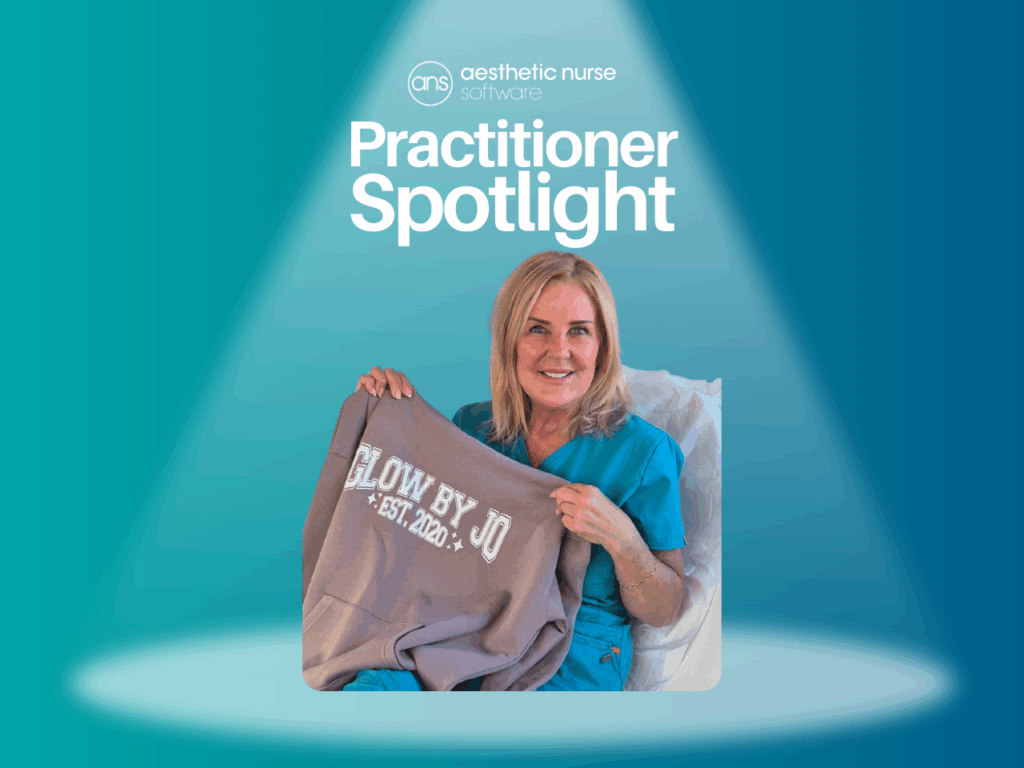
Practitioner Spotlight – Jo Glenton
From Forensics to Facials: Jo Glenton’s Aesthetics Journey Jessica Chipman • September 30, 2025 From balancing her role as a forensic nurse in police custody to […]
Practitioner Spotlight – Samantha Challinor
Natural Results, Ethical Care: Meet Samantha Challinor Jessica Chipman • September 22, 2025 With nearly two years of experience in the aesthetics industry, Samantha Challinor has […]

Practitioner Spotlight – Lisa Whiting
Word-of-Mouth Magic: How Lisa Whiting Built a Thriving Aesthetics Clinic Jessica Chipman • September 11, 2025 With nearly two decades of experience in aesthetics, Lisa Whiting […]
“I'd highly recommend ANS if you're looking for an effective system to manage bookings, reminders and record keeping. The support team are always on hand for any problems and couldn't be more happy to help.”
Dr Amrita Bhogal
AKB Aesthetics
“Being able to send out appointment reminders has really reduced the number of no shows in my clinic!”
Rebecca Hopkinson
Hopkinson Aesthetics
“ANS helps the clinic to run smoothly. My patients love the online booking system as they can book their appointment anytime, day or night!”
Nikki Zanna
Halo Aesthetics
“The team are so supportive. Nothing ever seems to be too much trouble. They really do go above and beyond for us and I wish that I had started using ANS sooner!”
Lorraine Guinan
Nurse Prescriber
“Being a paper lover it was difficult to give it up, but because I actually enjoy using ANS it has been easy to switch”
Mel Recchia
Nurse Prescriber
“I absolutely love that I can access the software with ease whether I’m on my mobile, iPad or laptop”
Dr Sharan Uppal
Doctor
“I'd highly recommend ANS if you're looking for an effective system to manage bookings, reminders and record keeping. The support team are always on hand for any problems and couldn't be more happy to help.”
Dr Amrita Bhogal
AKB Aesthetics
“Being able to send out appointment reminders has really reduced the number of no shows in my clinic!”
Rebecca Hopkinson
Hopkinson Aesthetics
“ANS helps the clinic to run smoothly. My patients love the online booking system as they can book their appointment anytime, day or night!”
Nikki Zanna
Halo Aesthetics
“The team are so supportive. Nothing ever seems to be too much trouble. They really do go above and beyond for us and I wish that I had started using ANS sooner!”
Lorraine Guinan
Nurse Prescriber
“Being a paper lover it was difficult to give it up, but because I actually enjoy using ANS it has been easy to switch”
Mel Recchia
Nurse Prescriber
“I absolutely love that I can access the software with ease whether I’m on my mobile, iPad or laptop”
Dr Sharan Uppal
Doctor
“I'd highly recommend ANS if you're looking for an effective system to manage bookings, reminders and record keeping. The support team are always on hand for any problems and couldn't be more happy to help.”
Dr Amrita Bhogal
AKB Aesthetics
“Being able to send out appointment reminders has really reduced the number of no shows in my clinic!”
Rebecca Hopkinson
Hopkinson Aesthetics
“ANS helps the clinic to run smoothly. My patients love the online booking system as they can book their appointment anytime, day or night!”
Nikki Zanna
Halo Aesthetics
“The team are so supportive. Nothing ever seems to be too much trouble. They really do go above and beyond for us and I wish that I had started using ANS sooner!”
Lorraine Guinan
Nurse Prescriber
“Being a paper lover it was difficult to give it up, but because I actually enjoy using ANS it has been easy to switch”
Mel Recchia
Nurse Prescriber
“I absolutely love that I can access the software with ease whether I’m on my mobile, iPad or laptop”
Dr Sharan Uppal
Doctor
“I'd highly recommend ANS if you're looking for an effective system to manage bookings, reminders and record keeping. The support team are always on hand for any problems and couldn't be more happy to help.”
Dr Amrita Bhogal
AKB Aesthetics
“Being able to send out appointment reminders has really reduced the number of no shows in my clinic!”
Rebecca Hopkinson
Hopkinson Aesthetics
“ANS helps the clinic to run smoothly. My patients love the online booking system as they can book their appointment anytime, day or night!”
Nikki Zanna
Halo Aesthetics
“The team are so supportive. Nothing ever seems to be too much trouble. They really do go above and beyond for us and I wish that I had started using ANS sooner!”
Lorraine Guinan
Nurse Prescriber
“Being a paper lover it was difficult to give it up, but because I actually enjoy using ANS it has been easy to switch”
Mel Recchia
Nurse Prescriber
“I absolutely love that I can access the software with ease whether I’m on my mobile, iPad or laptop”
Dr Sharan Uppal
Doctor